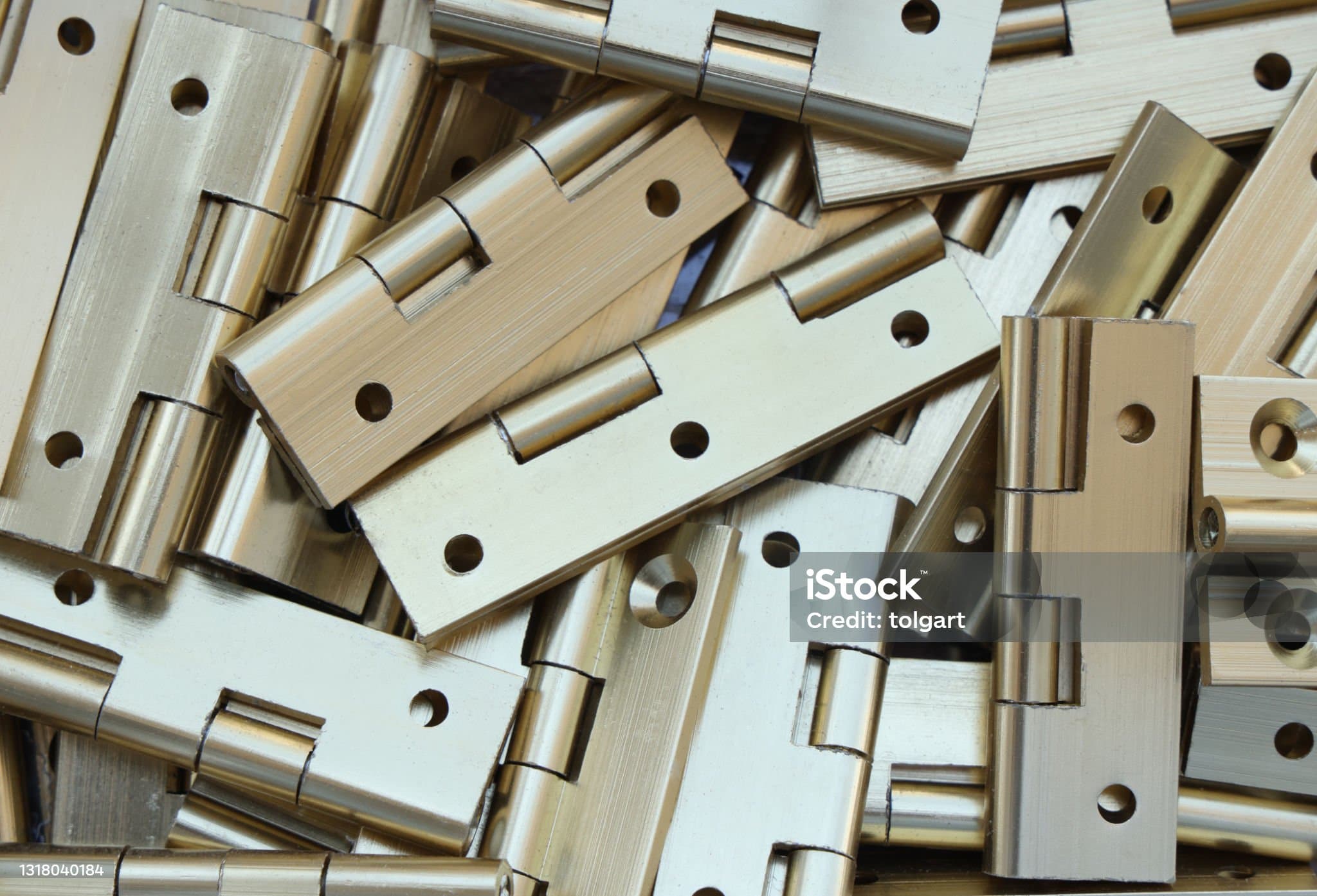
Plain bearing hinges are the simplest and most economical hinge construction — the knuckle rotates directly around the pin with no bearing surface between them. For low-to-moderate traffic doors, this is entirely adequate and has been the standard residential hinge design for generations.
Ball bearing hinges insert a ring of hardened steel or stainless steel ball bearings (commonly ABEC-5 precision-grade) between the knuckle sections, so the door's weight rides on the bearings rather than directly on the pin surface. The result is dramatically reduced friction, quieter operation, and far less wear over time — but at a moderate cost premium over plain bearing construction.
The deciding factor is traffic frequency and door weight, not just budget. A bedroom or interior residential door that opens a handful of times a day rarely justifies the extra cost of ball bearings — a quality plain bearing hinge will perform well for its expected lifespan. But a commercial entrance, hotel corridor door, hospital ward door, or any door cycling 50+ times daily will show audible squeaking and visible wear on plain bearing hinges within 1–2 years, while a ball bearing hinge rated to 200,000+ cycles handles that same traffic for 5+ years without maintenance.
Heavier doors compound the case for ball bearings even at moderate traffic levels. Solid-core fire doors, glazed commercial doors, and anything over roughly 45kg per leaf put more direct load on the pin-knuckle contact point — exactly the friction ball bearings are designed to absorb. Self-closing doors are a particularly strong case for ball bearings, since the repeated spring-assisted swing accelerates wear on a plain bearing pin far faster than a manually operated door of the same weight.
As a simple rule for buyers and specifiers: if the door is residential, interior, and lightly trafficked, plain bearing hinges are a sound, cost-effective choice. If the door is commercial, self-closing, fire-rated, or expected to see more than roughly 20–30 cycles a day, specify ball bearing hinges — the incremental cost is small relative to the maintenance calls and complaints a worn plain bearing hinge generates over a building's lifetime.
Our export team responds within 24 hours with pricing, samples, and technical guidance.
Request a Quote ›