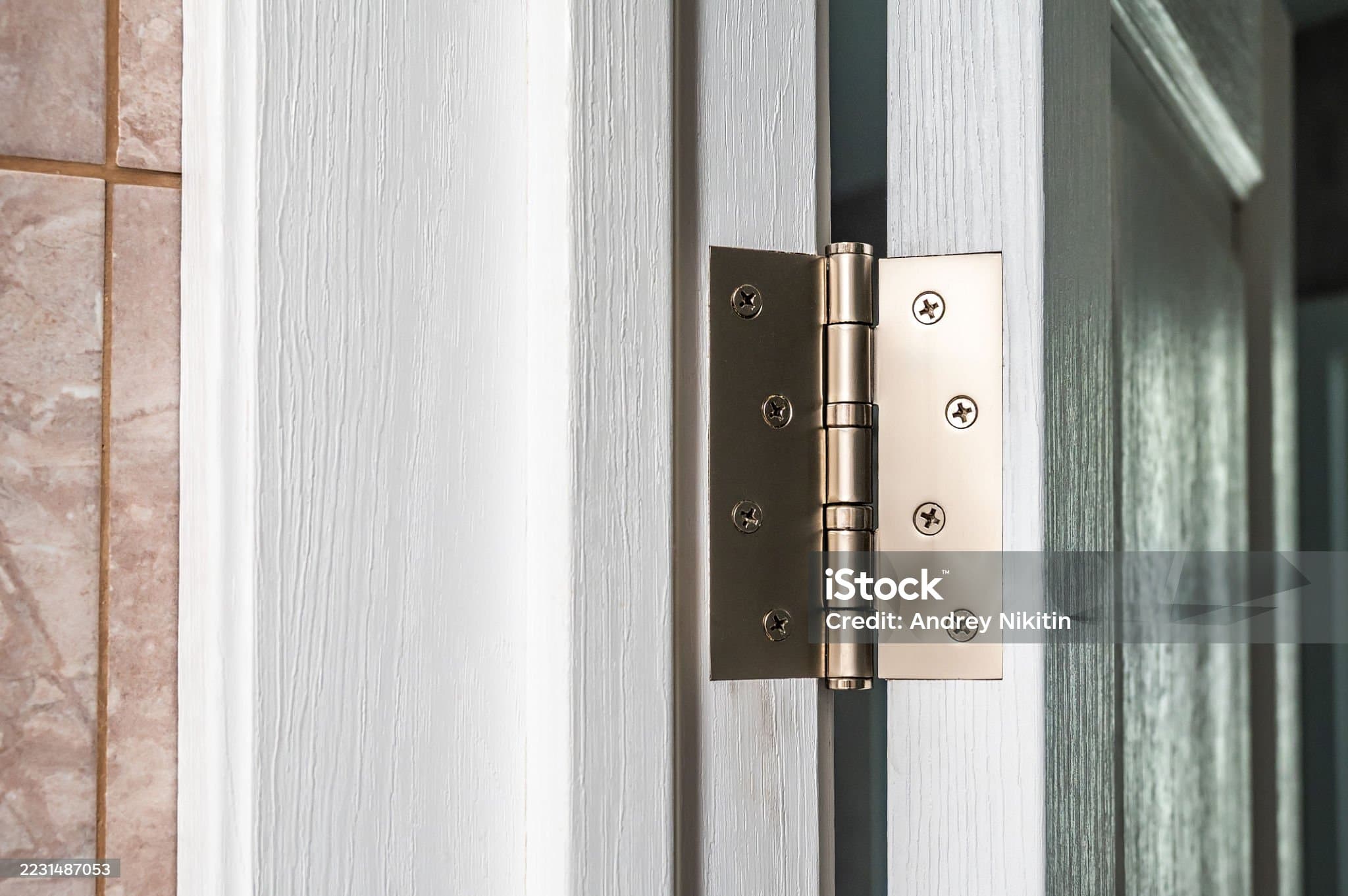
Choosing the wrong hinge size is one of the most common — and most expensive — mistakes in a hardware order. An undersized hinge sags under load, wears out quickly, and can void a door manufacturer's warranty. An oversized hinge wastes money and can look disproportionate on lighter doors. Getting the size right the first time saves rework, freight costs on replacement shipments, and complaints from the field.
The starting point is door weight and height, not just thickness. As a general rule: doors up to 1980mm (78") in height and under 40kg typically use 100mm (4") butt hinges. Standard residential doors between 40–60kg move up to 100–125mm hinges, often with a ball bearing variant for smoother operation. Heavier commercial doors, fire-rated doors, or doors over 2100mm in height should move to 125–150mm hinges, and anything approaching 80kg or more should be specified with ball bearing or heavy-duty construction rather than plain bearing.
Door thickness matters just as much as height. A standard 35mm domestic door works fine with a 75–100mm hinge at 2mm gauge. Once you're specifying 44–54mm commercial or fire-rated doors, the hinge gauge should increase to 2.5–3mm to prevent leaf distortion under the door's own weight over time.
Traffic frequency is the factor most buyers underestimate. A hinge rated for 200,000 cycles sounds like a lot until you calculate that a busy commercial entrance door can see 100+ open-close cycles a day — that's 36,500 cycles a year, meaning a 200,000-cycle hinge is rated for roughly 5–6 years of heavy use before wear becomes noticeable. For hotel corridors, retail entrances, or hospital doors, ball bearing hinges rated to ANSI/BHMA A156.1 Grade 1 are worth the marginal cost difference over plain bearing hinges.
Finally, always confirm the standard your market expects. UAE and GCC buyers frequently ask for BS EN 1935 Grade 13 compliance for commercial projects. Indian domestic buyers commonly reference IS 1341. If you're exporting, ask your manufacturer which standard your hinge is tested and certified against — a hinge that's the 'right size' on paper but untested to the buyer's expected standard can still cause a shipment to be rejected at the destination port.
If you're unsure which size and grade fits your project, send us the door height, width, thickness, and expected traffic level — our export team will recommend the correct specification and can provide free samples before you commit to a bulk order.
Our export team responds within 24 hours with pricing, samples, and technical guidance.
Request a Quote ›