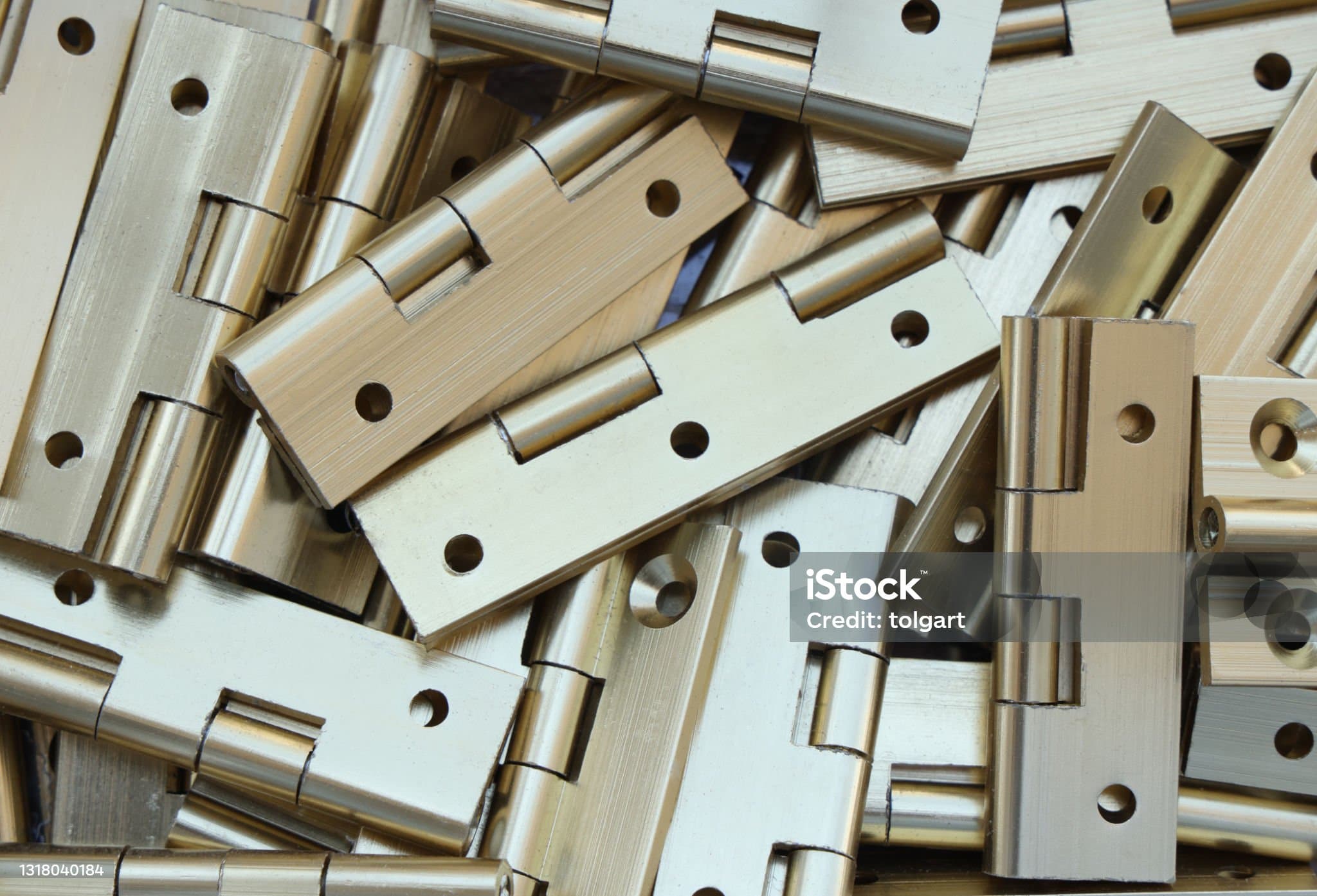
Heavy-duty hinges — weld-on strap hinges, T-hinges, and reinforced pin hinges — exist for a reason: standard butt hinges are engineered for typical interior and residential door weights, and pushing them beyond that range leads to predictable, avoidable failures. Here are five signs a project needs to move up to heavy-duty hardware.
1. The door or gate visibly sags or drags. If a gate or door has developed a downward droop at the latch side, or scrapes the frame or ground when swinging, the hinge is very likely undersized for the weight it's carrying. Standard butt hinges are typically rated up to 80kg per pair — anything heavier, especially solid wood gates, security doors, or metal-clad doors, needs hinges rated to 100kg and beyond.
2. Screw holes are enlarging or stripping. Repeated stress on an undersized hinge transfers load to the mounting screws, gradually widening the pilot holes in the door frame until screws no longer bite. If you've re-drilled or filled screw holes on the same door more than once, that's a strong signal the hinge itself — not the installation — is the problem.
3. The application is industrial, warehouse, or high-security. Warehouse roller doors, security gates, and industrial machinery access panels all involve either heavier materials or more forceful daily operation than residential doors are designed around. These applications should default to heavy-duty weld-on or bolt-on hinges rated to 100–500kg per pair from the outset, rather than waiting for a standard hinge to fail first.
4. The hinge is exposed to constant outdoor stress. Gates and exterior doors subject to wind load, repeated slamming, or livestock/vehicle contact experience far more cyclical stress than an interior door. Even at moderate weights, this kind of repeated mechanical shock is better served by heavier-gauge, weld-on construction than a standard bearing hinge.
5. You're specifying for a commercial or government project. Public buildings, schools, and government (PWD) projects typically have minimum hardware weight-rating requirements written into the tender specification for exactly this reason — the expected traffic and misuse tolerance is higher than a private residence. If your project falls into this category, check the tender document's hinge specification before defaulting to standard butt hinges.
If you're seeing any of these signs on an existing installation, or specifying a new gate, warehouse door, or industrial application, our heavy-duty range is rated from 100kg up to 500kg per pair — send us the door or gate dimensions and expected use and we'll recommend the right hinge type.
Our export team responds within 24 hours with pricing, samples, and technical guidance.
Request a Quote ›